


Understanding Knee Osteoarthritis
Reviewed by Amy Neuzil, ND
Why Knee Arthritis Is More Than "Wear and Tear"
Knee osteoarthritis is one of the most common causes of chronic knee pain, and it changes the way a person moves through the world. At first, it may be a small ache after a long walk, a little stiffness when getting out of a chair, or a twinge while climbing stairs. Over time, those small inconveniences can become daily limitations - fewer walks, less confidence, more planning around pain, and the quiet fear that surgery may be inevitable.
The encouraging news is that knee osteoarthritis does not have to follow a straight path toward joint replacement. Many people are able to improve pain, mobility, and quality of life with the right combination of healthy lifestyle choices, evidence-based conservative care, and, for appropriately selected patients, regenerative medicine.
At iRegMed Clinic Miami, we believe every successful treatment plan begins with understanding what is happening inside the joint. Only then can we determine which combination of therapies offers the greatest opportunity to help you stay active and continue doing the things you love.
If you've recently injured your knee, you may also find our article “I Hurt My Knee... Now What?” helpful. If you're exploring non-surgical treatment options, our guide “Can You Treat Knee Pain Without Surgery?” provides an overview of today's treatment approaches.

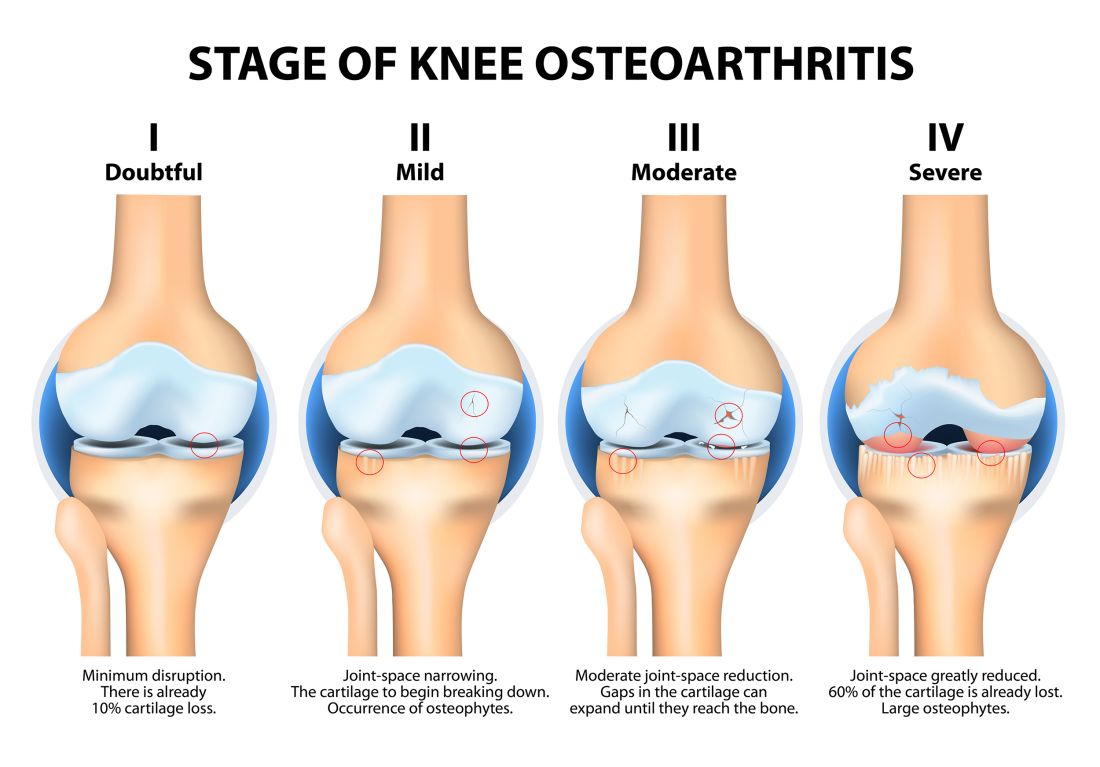
Knee Osteoarthritis Is More Than "Wear and Tear"
Osteoarthritis is often described as simple "wear and tear", but we now know that this description tells only part of the story.
Rather than affecting cartilage alone, knee osteoarthritis involves the entire joint. Cartilage, bone, the joint lining (synovium), ligaments, muscles, and the body's inflammatory signaling all play a role in how symptoms develop and how the disease progresses. This is one reason why two people with similar X-rays can experience very different levels of pain and function.
For some people, knee osteoarthritis develops gradually over many years as part of the natural aging process. For others, it may follow a previous sports injury, a meniscus tear, ligament damage, repetitive stress, or excess weight placing additional strain on the joint.
Understanding these underlying changes helps explain why there is rarely a single solution. Successful treatment is often about addressing the whole joint - not simply treating the pain.
Listening to What Your Knee Is Telling You
Every case of knee osteoarthritis tells a different story.
Some people notice stiffness during the first few steps after getting out of bed or standing up from a chair. Others experience aching after a long walk, discomfort when climbing stairs, swelling after activity, or a grinding sensation when the knee moves. Many patients tell us they gradually stop doing the activities they enjoy - not because they can't, but because they no longer trust their knee.
These early changes deserve attention. Mild stiffness after rest, occasional swelling, reduced flexibility, or discomfort with everyday activities may seem like small problems, but they can be early signs that your knee needs additional support.
As osteoarthritis progresses, symptoms may become more persistent. Pain can occur during daily activities - or even while resting. Walking longer distances becomes more difficult, the knee may lose flexibility, and simple tasks such as shopping, getting out of a car, or climbing stairs may require increasing effort.
The important message is that knee osteoarthritis is not simply something you have to "live with". The earlier the condition is understood and appropriately managed, the greater the opportunity to reduce symptoms, preserve mobility, and maintain an active lifestyle.
Why Early Treatment Matters
Many people assume that knee osteoarthritis is simply something they have to accept until the pain becomes severe enough to justify surgery. In reality, the opposite is often true. The earlier osteoarthritis is recognized and managed, the greater the opportunity to reduce pain, preserve mobility, and maintain an active lifestyle.
Early treatment is not about doing more - it's about doing the right things at the right time. Addressing stiffness, improving muscle strength, maintaining a healthy weight, and supporting the joint before symptoms become severe can help slow the cycle of pain, reduced movement, muscle weakness, and declining function.
Rather than waiting for everyday activities to become increasingly difficult, early intervention focuses on helping you stay active, independent, and confident in your movement for as long as possible.


Building the Foundation for Living Well with Knee Osteoarthritis
Home care is not a "small" part of managing knee osteoarthritis - it is the foundation of long-term joint health.
One of the most important things you can do is keep your knee moving. Regular, jointfriendly activities such as walking, cycling, swimming, water exercise, tai chi, or a guided strengthening program help lubricate the joint, improve flexibility, and strengthen the muscles that support the knee. Stronger quadriceps, hamstrings, hips, and gluteal muscles reduce stress on the joint and often make everyday movements feel easier and more comfortable.
Just as importantly, the choices you make each day influence how your knee feels. Maintaining a healthy body weight can significantly reduce the load placed on the joint with every step. Supportive footwear, avoiding prolonged periods of sitting, pacing activities throughout the day, and using heat or ice when appropriate can all help manage symptoms. If your physician recommends a brace or a cane, think of it as a tool that supports your mobility and confidence - not as a sign that you've failed.
Nutrition also plays an important role in overall recovery and resilience. A balanced, protein-rich eating pattern that supports muscle health and healthy metabolism may help create a better environment for healing. Some people also explore supplements such as turmeric, ginger, glucosamine, chondroitin, or vitamin D. While these may benefit certain individuals, the scientific evidence is mixed, and supplementation should always be discussed with your healthcare provider.
Perhaps the most important lesson is that successful management of knee osteoarthritis rarely depends on one "magic" treatment. It is usually the result of many small steps working together. As pain improves, you naturally begin moving more. As you move more, your muscles become stronger. Stronger muscles provide better support for the knee, allowing you to move with greater confidence and less discomfort.
For many people, this strong foundation provides meaningful relief and helps them remain active for years. For others, however, symptoms may continue to progress despite their best efforts.
Rethinking Knee Osteoarthritis
For many years, knee osteoarthritis was seen as something people simply had to "live with" until the pain became severe enough to require surgery. Today, we know there is often much more that can be done.
Many people can remain active and independent for years by combining healthy lifestyle choices, evidence-based conservative care, and carefully selected regenerative therapies as part of a personalized treatment plan. The goal isn't simply to reduce pain - it's to help you move with greater confidence, preserve your mobility, and continue enjoying the activities that matter most to you.
When Conservative Care Isn't Enough
For many people, the combination of regular exercise, physical therapy, healthy lifestyle choices, and appropriate medical care provides meaningful relief and helps them remain active for years.
Sometimes, however, symptoms continue to progress despite doing everything right. Walking becomes more uncomfortable, stiffness lasts longer, and activities that were once enjoyable begin to feel increasingly difficult. This is often the point where people begin to wonder whether surgery is now inevitable.
Fortunately, that isn't always the case.
Some patients reach a stage where their joint may benefit from additional biological support. Rather than replacing conservative care, regenerative medicine may become another tool to help improve the environment inside the joint and support the body's natural healing response.
How Regenerative Medicine May Support Knee Osteoarthritis
One of the most important advances in our understanding of knee osteoarthritis is that pain is not caused by cartilage loss alone.
Inflammation, irritation of the joint lining, changes within the underlying bone, immune signaling, and the body's ability to repair tissue all influence how the knee feels. This is one reason why two people with very similar X-rays can experience completely different levels of pain and function.
Rather than focusing solely on relieving symptoms, regenerative medicine aims to improve the biological environment inside the joint and support the body's own healing response.
At iRegMed Clinic Miami, GOLDIC (Gold-Induced Cytokine) therapy is the cornerstone of our regenerative treatment approach for appropriately selected patients with knee osteoarthritis. Because osteoarthritis involves ongoing inflammation throughout the joint—not simply cartilage loss—our goal is to help create a healthier biological environment that supports the body's natural healing response rather than focusing solely on symptom relief.
For many appropriately selected patients, GOLDIC can be used as an effective standalone regenerative treatment. Depending on the stage of osteoarthritis, your symptoms, activity level, and treatment goals, your physician may also recommend additional supportive therapies - including physician-directed peptide therapy, StemWave® acoustic wave therapy, nutritional optimization, and a personalized rehabilitation program - to complement your overall recovery.
Our goal is never to recommend more treatment than necessary. Every treatment plan is individualized and designed to help you reduce pain, improve function, and remain active for as long as possible.
Is Regenerative Medicine Right for You?
The answer depends on the condition of your knee, your symptoms, and your goals.
Many patients with mild to moderate knee osteoarthritis - and some patients with more advanced disease - may benefit from regenerative medicine, particularly if they continue to experience pain, stiffness, swelling, or reduced activity despite following an appropriate conservative treatment program.
The first step is always a comprehensive evaluation. At iRegMed Clinic Miami, this includes a detailed medical history, a physical examination, a review of any recent Xrays or MRI scans, a discussion of previous treatments, and an understanding of your lifestyle and activity goals.
Just as importantly, regenerative medicine is not the right choice for everyone. Some patients with advanced joint destruction or severe functional limitations may ultimately achieve the best long-term outcome with knee replacement surgery.
Choosing the right treatment always begins with understanding the condition - not with selecting a particular procedure.

When Surgery Really Is the Best Choice
One of the greatest misconceptions about regenerative medicine is that it is intended to replace surgery. It isn't.
Modern knee replacement surgery can provide outstanding results for patients with advanced osteoarthritis when pain becomes severe, mobility is significantly limited, and appropriate non-surgical treatments no longer provide meaningful relief.
Our goal is never to avoid surgery at all costs. Instead, we aim to recommend the least invasive treatment capable of helping each patient achieve the best possible longterm outcome. For some people, that means continuing with conservative care. For others, regenerative medicine may become an important part of their treatment plan. And for some, surgery truly is the right answer.
The important thing is that the decision is based on your symptoms, your examination, your imaging, your overall health, and your personal goals - not simply on an X-ray alone.
Living Well with Knee Osteoarthritis
For many years, people with knee osteoarthritis were often told to "wait until it gets bad enough" for surgery. Understandably, that can leave patients feeling frustrated and discouraged, as though worsening pain is simply something they have to accept.
Today, our understanding of knee osteoarthritis is changing. Rather than waiting for symptoms to progress, we can often take meaningful steps to reduce pain, improve mobility, support joint health, and help people remain active for longer. The goal is not simply to manage symptoms - it's to help you continue living the life you enjoy.
At iRegMed Clinic Miami, we believe every patient deserves an individualized treatment plan. For many people, that begins with healthy lifestyle choices, physical therapy, strength training, and other evidence-based conservative treatments. When appropriate, regenerative medicine - including GOLDIC, our flagship orthobiologic therapy - may become an important part of that plan by supporting the body's natural repair mechanisms.
Knee osteoarthritis does not have to define your future. With the right diagnosis, thoughtful conservative care, personalized regenerative treatment when indicated, and a commitment to staying active, many people can continue enjoying the activities they love while delaying - or, in some cases, avoiding - the need for surgery.
Explore Our Knee Health Resource Center
Whether you're recovering from a recent knee injury, exploring non-surgical treatment options, or learning how to live well with knee osteoarthritis, understanding your condition is the first step toward making informed decisions. Continue exploring our patient education series with these related articles:
Blog – Can You Treat Knee Pain Without Surgery?
Learn why every knee injury is different, why the correct diagnosis matters, and how conservative care and regenerative medicine may help selected patients avoid surgery.
Blog – I Hurt My Knee…. Now What?
A practical step-by-step guide to what you should do during the first hours, days, and weeks after a knee injury - from early self-care to understanding when medical evaluation and regenerative medicine may become part of your recovery.
Ready to Move Forward
If you're living with knee osteoarthritis, you don't have to navigate it alone. Whether your symptoms have only recently begun or you've been dealing with knee pain for years, we're here to help.
At iRegMed Clinic Miami, we combine a comprehensive evaluation, evidence-based conservative care, and advanced regenerative medicine to develop a personalized plan that supports your mobility, reduces pain, and helps you stay active and independent for as long as possible.
We invite you to schedule a complimentary 15-minute screening to discuss your symptoms, review any imaging you may already have, and determine the treatment approach that best fits your individual needs, lifestyle, and goals.
References
1. Hunter DJ, Bierma-Zeinstra S. Osteoarthritis. The Lancet. 2019;393(10182):1745–1759. doi:10.1016/S0140-6736(19)30417-9.
2. American Academy of Orthopaedic Surgeons. Management of Osteoarthritis of the Knee (Non-Arthroplasty): Evidence-Based Clinical Practice Guideline. 3rd ed. 2021.
3. Bannuru RR, Osani MC, Vaysbrot EE, et al. OARSI guidelines for the non-surgical management of knee, hip, and polyarticular osteoarthritis. Osteoarthritis and Cartilage. 2019;27(11):1578–1589. doi:10.1016/j.joca.2019.06.011.
4. Kolasinski SL, Neogi T, Hochberg MC, et al. 2019 American College of Rheumatology/Arthritis Foundation guideline for the management of osteoarthritis of the hand, hip, and knee. Arthritis Care & Research. 2020;72(2):149–162. doi:10.1002/acr.24131.
5. Schneider U, Kumar A, Murrell W, Ezekwesili A, Yurdi NA, Maffulli N. Intra-articular gold induced cytokine (GOLDIC®) injection therapy in patients with osteoarthritis of knee joint: a clinical study. International Orthopaedics. 2021;45(2):497–507. doi:10.1007/s00264-020-04870-w.
6. Feldt J, Donaubauer AJ, Welss J, Schneider U, Gaipl US, Paulsen F. Anti-inflammatory effects of an autologous gold-based serum therapy in osteoarthritis patients. Scientific Reports. 2022;12:3560. doi:10.1038/s41598-022-07187-3.
7. Jeyaraman M, Packkyarathinam RP, Thangaraju T, et al. GOLDIC therapy holds promise as an orthobiologic agent: a systematic review of the literature. Indian Journal of Orthopaedics. 2024;58:858–865. doi:10.1007/s43465-024-01167-7.